3. Behaviour Fundamentals

Behaviour Fundamentals

Behaviour Fundamentals - Audio Version

Behaviour Fundamentals (2:07)

Click above to listen to this section via audio. If it does not play or if you would like to download it to your device, click here.

Fulfilling Needs

Unwanted behaviour is inevitable, and the classroom or learning environment you will be managing is not always going to run smoothly. Whenever you bring people together, a certain amount of tension or conflict over time is nearly impossible to avoid. There are a number of reasons why behaviour challenges may occur. Most of this can be brought back to Maslow’s Hierarchy of Needs 
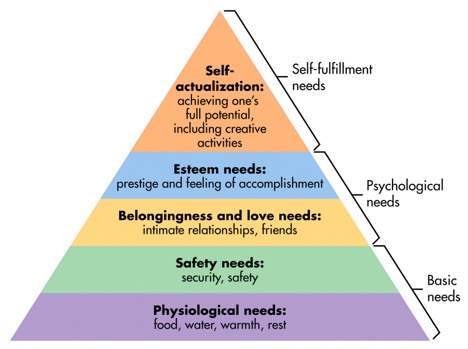

If the most basic of needs are not met, it is extremely difficult to fulfill the others. When participants are tired, hungry, or thirsty their ability to feel safe, calm, and connected is jeopardized. In the same way, if a participant feels left out or excluded, or feels that you don’t know their name, they will never feel respected and ready to fulfill their potential at camp. Behaviours can serve different functions (Ex. seeking attention or avoiding a task) and it’s important to take a curious & compassionate approach to understanding behaviour challenges.


If it is our goal to ensure that ALL youth explore their full potential, then we need to consider that participants’ needs are met from the foundation up. We also need to consider how to use communication to help uncover if participants’ needs are met, and encourage healthy communication for participants to express their needs.


(Image source: https://www.simplypsychology.org/maslow.html)

The ABC's of Behaviour

This section of the training was adapted from the training Promoting Positive Behaviour written by Dr. Nicole Neil, Western University Faculty of Education.

One way to understand behaviour, is to look at the ABCs of the behaviour. The ABCs are:

Antecedent - what happened right before?

The Antecedent is the setting or event that prompts any behaviour. The antecedent could be a demand, a transition or change, or a social interaction. Identifying and analyzing the antecedent provides you with an explanation as to WHY a certain behaviour is happening.

Identifying the antecedent is important because it can give you an opportunity to completely avoid or mediate the behaviour before it even happens. If there is one take away from this section, it should be: every behaviour happens for a reason, no exceptions.

It is possible to set up your camp in such a way that avoids a lot of the most common antecedents to unwanted behaviour while encouraging antecedents of desired behaviour. 

Example: The participants were 40 minutes into a design and build activity, the instructor announces that it’s time to clean up. 

Behaviour - what happened?

This is the observable, measurable, and specific action the participant does.

Example: A participant shouts and throws their scissors. 

Consequence - what was the outcome?

This is what happens immediately after the behaviour. The way you react can either reinforce an unwanted behaviour or reinforce a desired behaviour.

Example: The instructor lets the participant leave the table without cleaning up.

This model helps us understand the “why” behind a behaviour and approach challenging behaviours with curiosity and compassion.

Activity Three: Behaviour 101

Use Activity Three in your Classroom Management Workbook, or a personal notebook to brainstorm why you think participants may have behaviour challenges. Then, using the space below, consider what that might look like in action. If possible, compare answers with a partner or in your team, adding to your lists to create the most comprehensive map of unwanted behaviour. 


Think:

  • What generalizations can you make? 
  • What stands out to you, and why?
  • How can you best prepare yourself for inevitable behaviour challenges?  

1. Reasons: Why do participants have unwanted behaviour? 

ie. Sleepy or hungry, feeling frustrated with a challenging activity.

2.  Observations: What might unwanted behaviour look like? 

ie. Not keeping focus, complaining or getting agitated.


Viewed 5,229 times